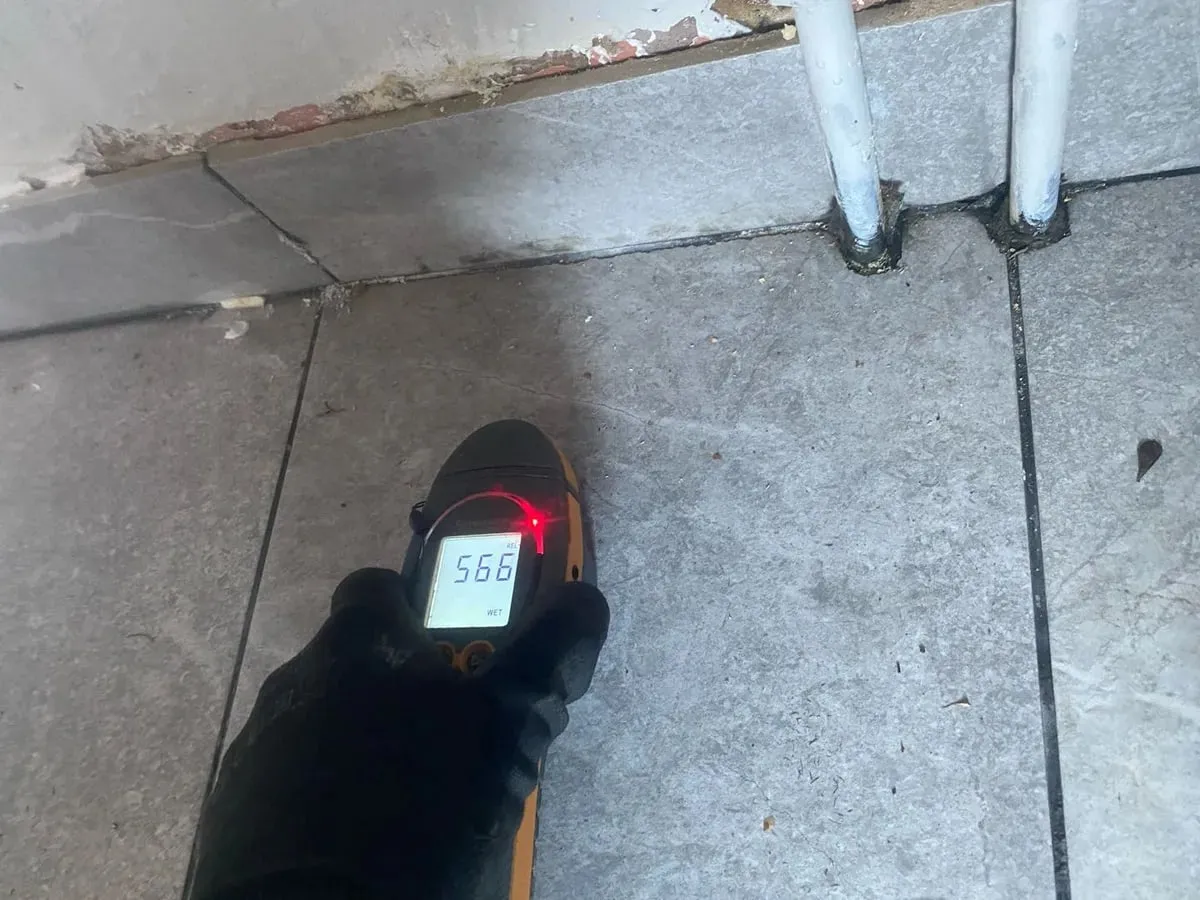
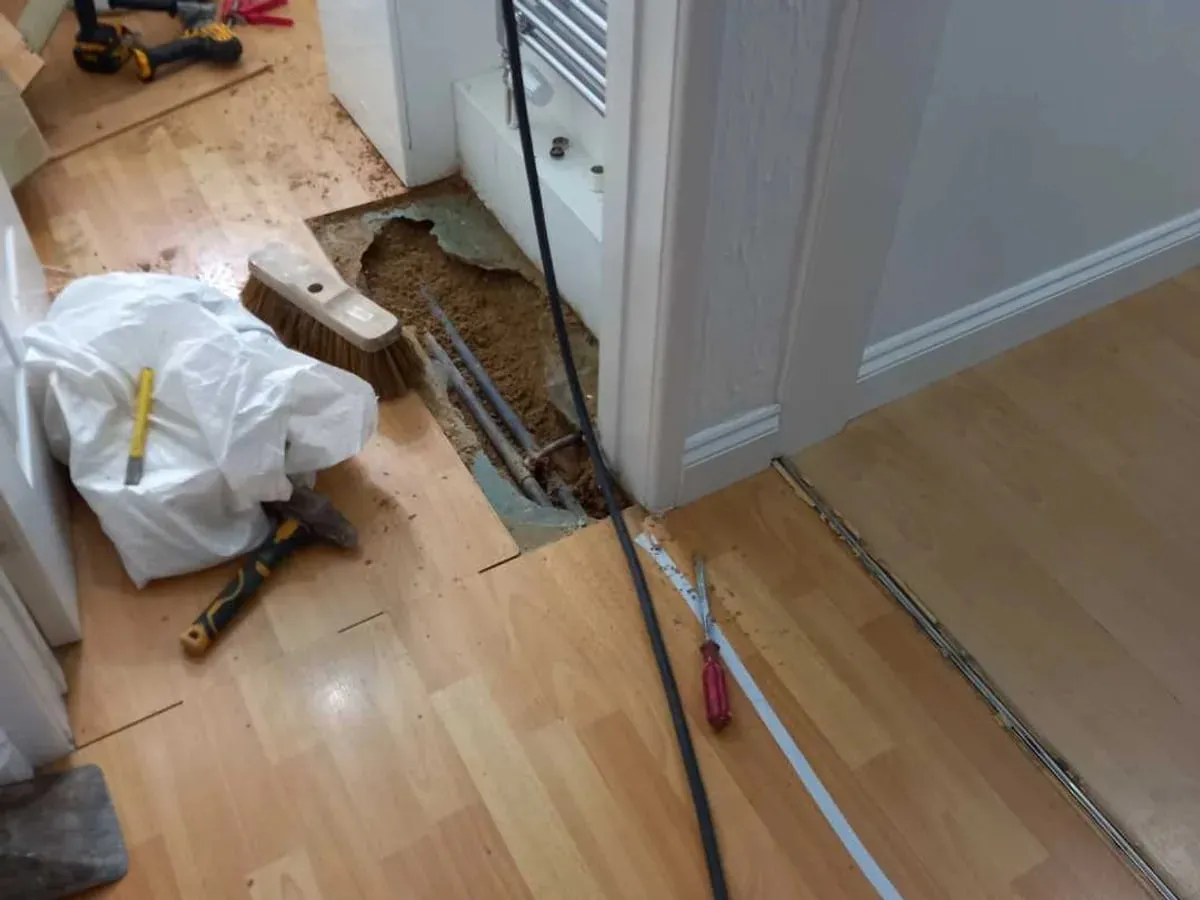
Damp patches that return or spread
Staining on a ceiling, peeling paint, swollen skirting and lifting floor finishes can all indicate moisture reaching the building fabric. The source may be a plumbing leak, rainwater or condensation. Note whether the patch changes after rain, heating use or a bath or shower.
A water meter that moves with everything off
Turn off taps and water-using appliances, and allow toilets and tanks to finish refilling. Take a meter reading, avoid using water for 30 minutes and compare the reading. Movement means water has passed through the meter; check for automatic uses and leaking toilet cisterns before assuming a buried pipe has failed.
Repeated boiler pressure loss
A sealed heating system that regularly needs topping up should be checked. A visible valve leak, a pressure relief discharge or a boiler fault can cause pressure loss, as can concealed heating pipework. Keep a note of the readings and how quickly they change, and follow the boiler manufacturer’s instructions.
Water running when no tap is on
A steady hiss can come from a cistern refilling or water passing along a pipe towards a leak. Sound travels along pipework, so the place you hear it is only a starting point. Check whether a toilet or appliance is still filling. For the wider investigation, testing suitable pipe sections separately helps establish which circuit is losing water.
Wet ground or an unexplained bill increase
A persistent wet patch beside a supply route may warrant investigation, especially when the meter also moves with no known use. Rainfall, drainage and changes in household water use need considering too. Compare actual meter readings rather than relying only on an estimated bill.
When to arrange a concealed leak survey
If the cause remains hidden after accessible fittings have been checked, call with the symptoms, their timing and any meter or pressure readings. A survey can investigate the pipework before you commit to opening floors or walls. The survey guide explains the stages.
When marks appear across adjoining rooms, read why damp can appear away from a leaking pipe. Before a visit, use our survey preparation checklist.