What can be investigated before opening?
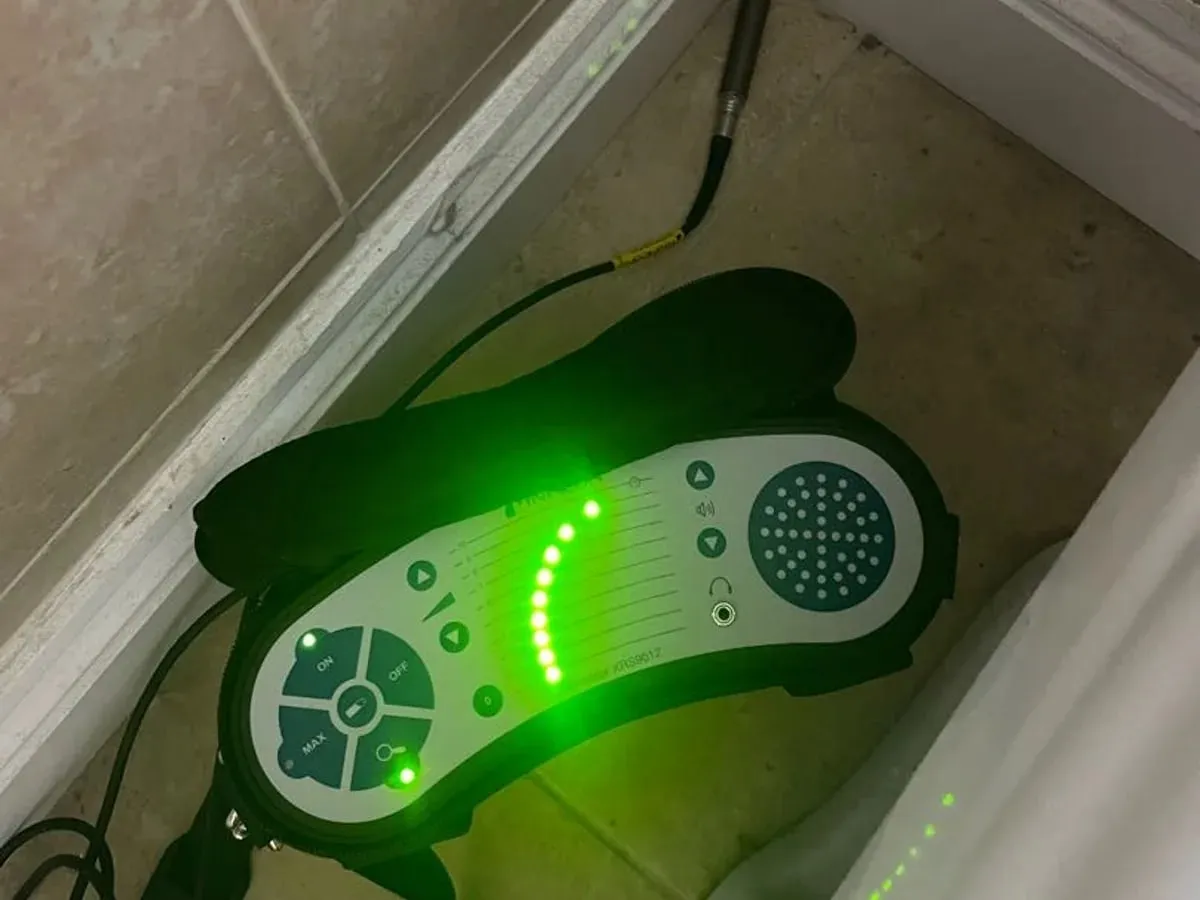
Tests at accessible fittings and on finished surfaces can help narrow the search. An inspection camera may provide a view through an existing or agreed opening. Neither approach guarantees that a floor or wall can remain intact throughout the job.
The useful aim is an opening supported by the findings. Read how the tests inform that decision, including examples where the initial results were inconclusive.
Agree the scope before a surface is opened
ADI’s published booking terms distinguish leak detection from access and repair: opening the leak area is not included in the detection quote. Ask for the scope and charges to be clear in your booking and any subsequent repair quote.
- Which wall, floor or fitting is proposed for access, and why?
- Who can authorise work on that area?
- What may need removing to give enough space for a repair?
- What happens if the first opening does not expose the fault?
- Who will arrange drying and restore finishes afterwards?
The opening can change as the evidence develops
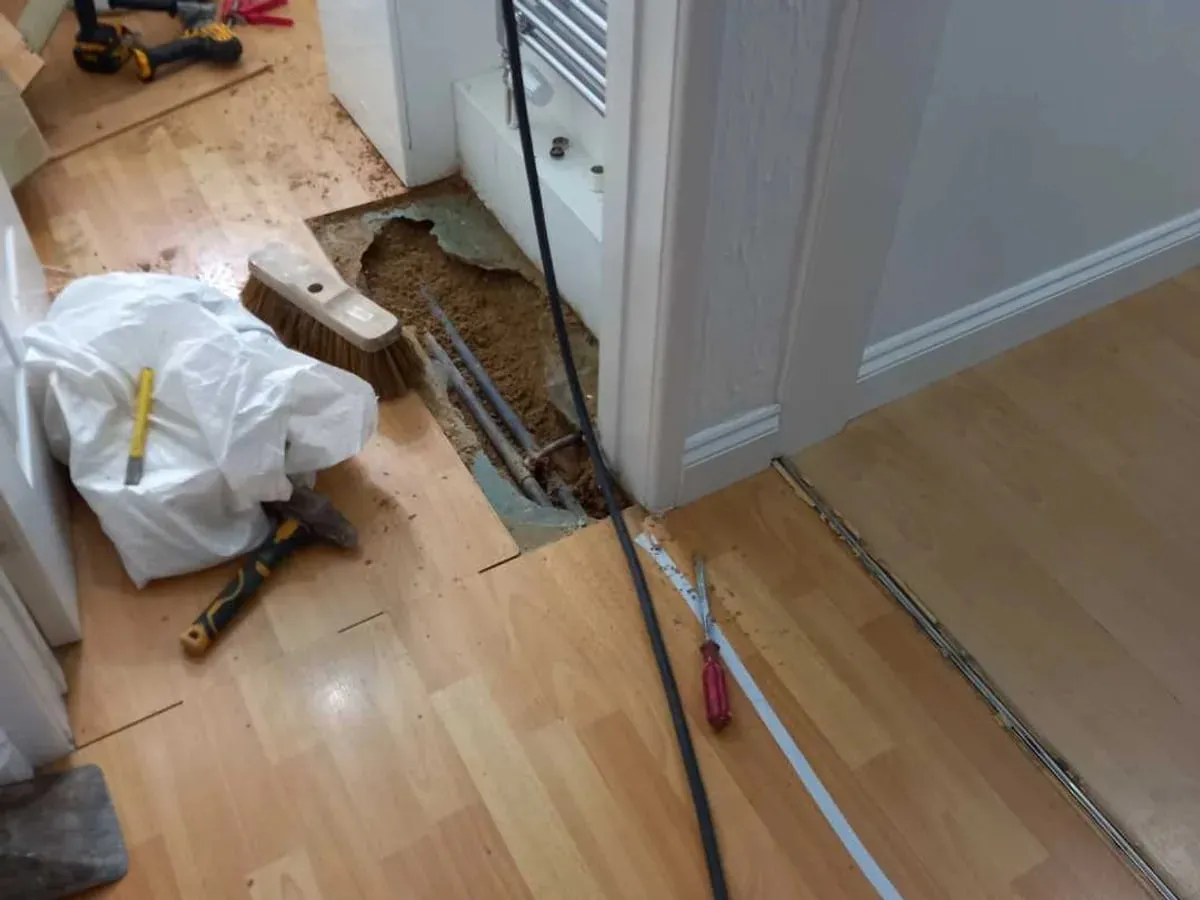
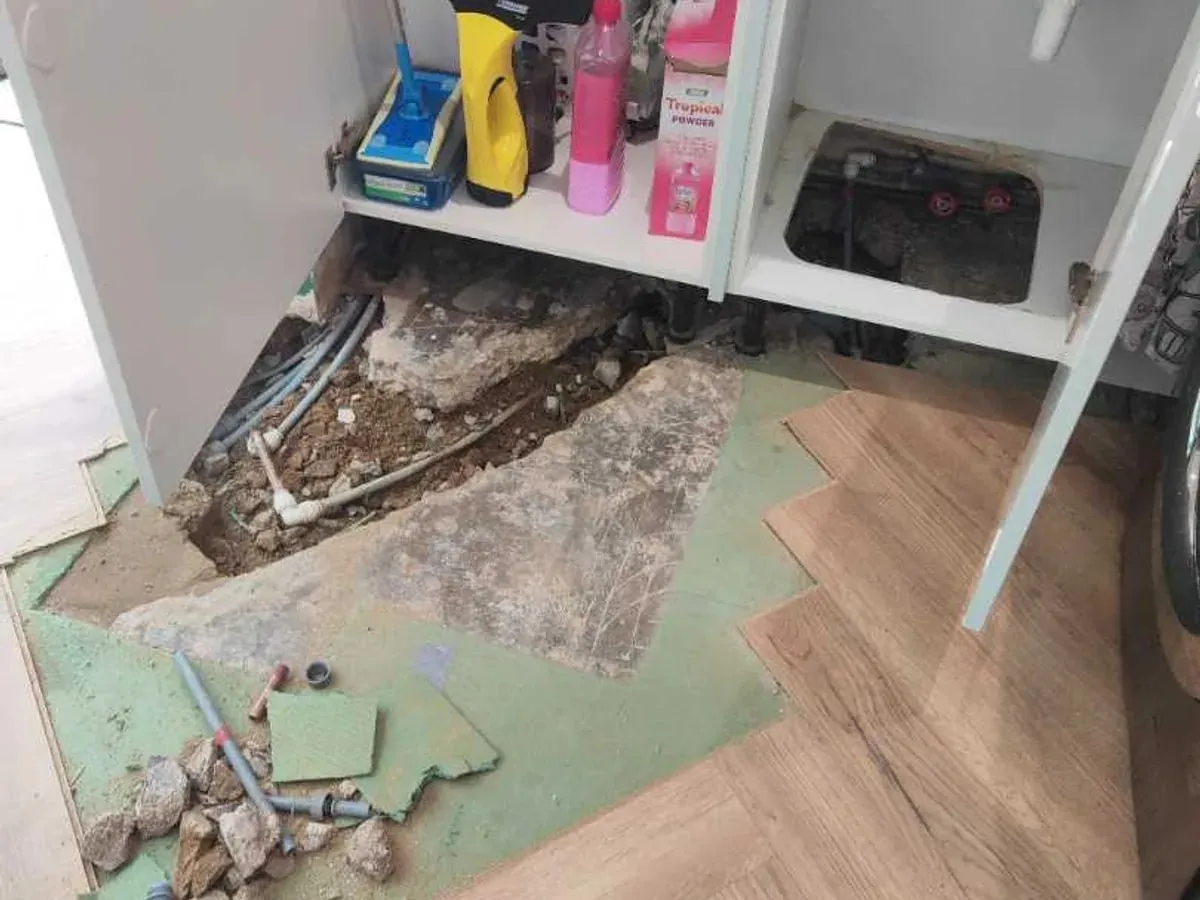
In East Dereham, the instruments had not pinpointed the leak. Moisture beneath the first opening led towards a second area near the hallway radiator. In Hull, the first exposed fault was followed by another leak further along the hot pipe.
Those records show why a small initial opening is not a promise about the total area needed. Photographs and an explanation of what has been found help keep the next decision clear.
Distinguish a permanent repair from a temporary one
The Billingshurst job explicitly recorded a temporary repair and recommended a permanent copper replacement. By contrast, March recorded replacement of the failed section followed by a 30-minute pressure test with no measurable loss.
Ask what was repaired, what was tested afterwards and whether any further pipework work is recommended. Do not assume that finding a leak guarantees it can be permanently repaired during the same appointment.
Plan drying and reinstatement separately
The Stafford, March and Hull records all distinguished pipe work from drying or making good. These follow-on recommendations are not evidence that the room was restored during the visit. In Lowestoft, floor reinstatement was not recorded as completed.
ADI’s terms state that repairs to buildings are not part of its service. Confirm arrangements for tiling, plastering, flooring and decoration, including any assessment needed before damp materials are covered again.
Keep a record of the outcome
Keep the findings, photographs, agreed work and any further recommendations together. If insurance is involved, check the requirements directly with your insurer before authorising work; a survey report does not decide cover.
The report checklist helps you distinguish a confirmed defect, the work completed and anything still outstanding.