Record when the water appears
Note whether the mark changes during a shower, after a bath is emptied, when heating runs or even when the room above is unused. Identify any previous plumbing work and the location of nearby boxing. A clear timeline is more useful than assuming the nearest fixture must be responsible.
Do not run water just to recreate damage. Share observations you already have and let the engineer decide how the suspected system can be checked.
The supply and the waste need different questions
A leaking pressurised supply can behave differently from a waste connection that receives water when a fixture drains. An investigation may need circuit tests, inspection of concealed routes and controlled checks of bathroom fixtures.
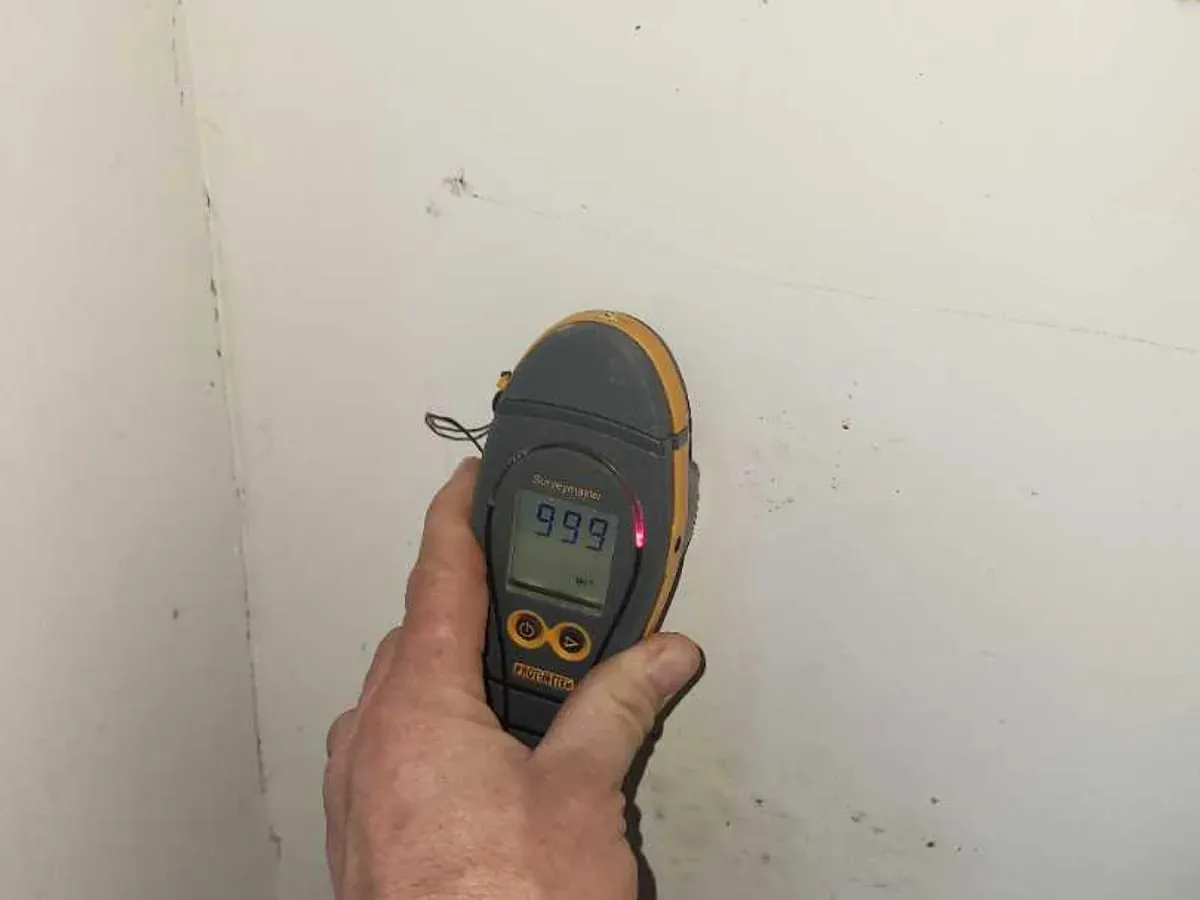
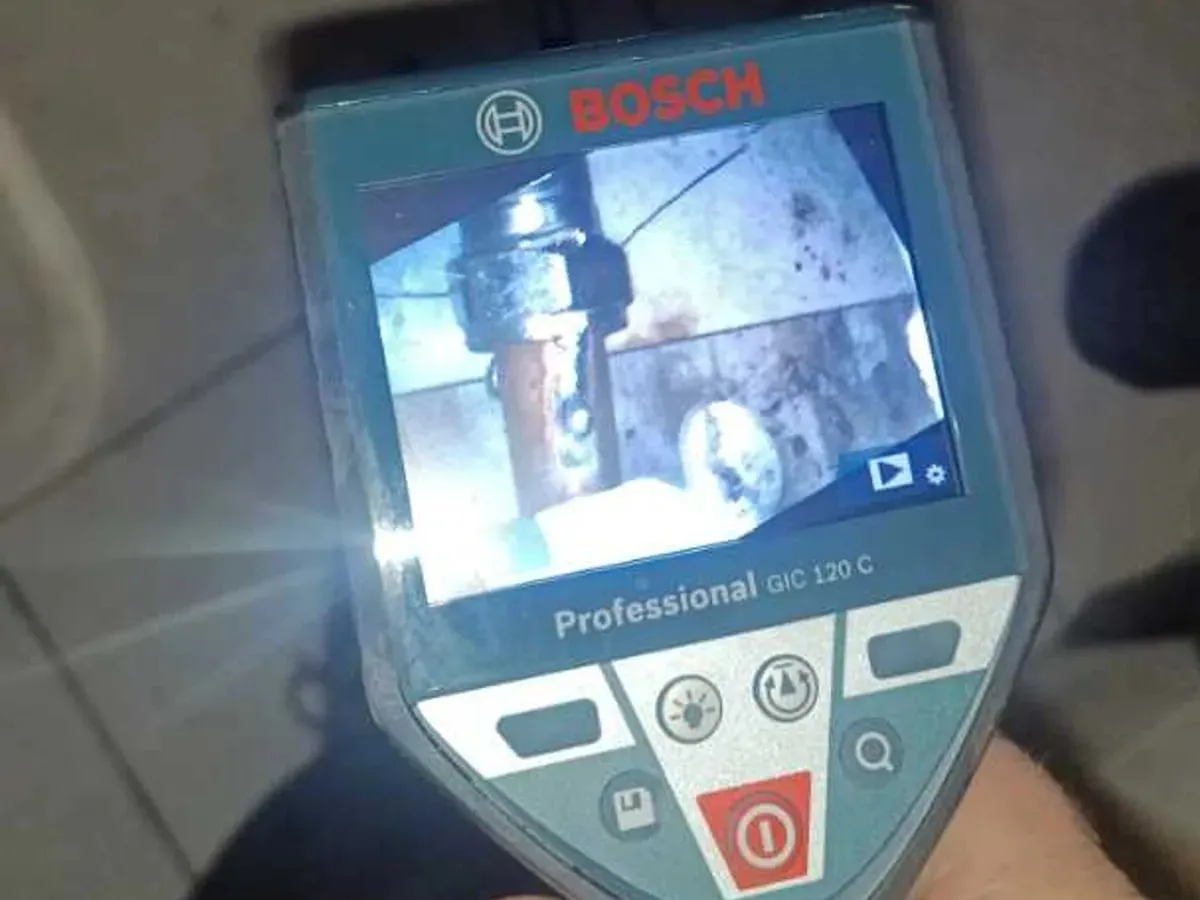
On the Stafford investigation, damage in rooms below the bathroom made waste plumbing a possibility. The internal supply failed a pressure test; tracer gas and an endoscope helped trace the route. The kitchen wall was opened and a supply pipe repaired. Dye testing found no waste leak in the inspected area.
Access may be needed in more than one room
The bathroom, the room below and intervening boxing may all provide useful access. In a flat, tell the office if these areas belong to different occupants so access can be discussed before the visit.
A camera needs a suitable opening and line of sight. Where an opening is proposed, establish why that location helps and what can be learned from it. See investigating pipes behind walls and boxing.
There can be two separate faults
The Southampton case recorded one leak on copper pipe within the kitchen wall near the ceiling and a second poorly installed fitting beneath the bathroom basin. Both were repaired and retested.
This is why the investigation should account for the observed symptoms rather than stop at the first visible defect. The report should distinguish confirmed findings from areas that remain uncertain.
Keep detection, repair and decoration distinct
Opening a ceiling or wall, repairing a pipe and restoring a decorated surface are different pieces of work. Confirm the proposed scope before authorising it. The access and repair guide explains the decisions, while survey preparation covers records and access.
If the observations point to water entering the building or another cause rather than concealed pipework, discuss that with the office so the investigation is suited to the problem.